23.09.2025


The automated trading revolution is reshaping financial markets in 2025. The global automated algorithmic trading market is projected to reach $53.8 billion by 2035, growing at a 10.6% CAGR. AI trading platforms are expected to hit $69.95 billion by 2034 with a staggering 20.04% annual growth rate.
Key Market Statistics:
• 60-73% of US equity trading is now algorithmic
• 92% of forex transactions use automated systems
• AI systems achieve 70-95% accuracy rates
• 68% of financial firms rank AI trading as top priority
Why 2025 is Perfect for Automated Trading:
• Accessible platforms democratize institutional-grade tools
• AI-powered algorithms eliminate emotional trading
• 24/7 market coverage across global exchanges
• Comprehensive risk management built in
Automated trading uses sophisticated software to analyze markets and execute trades based on predefined rules without human intervention. Modern systems combine:
• Technical analysis – Price patterns and indicators
• Fundamental data – Economic reports and earnings
• Market sentiment – News and social media analysis
• Alternative data – Satellite imagery, web scraping
| Aspect | Automated Trading | Manual Trading |
| Speed | Millisecond execution | Several seconds to minutes |
| Emotion | Completely emotionless | Subject to fear, greed, panic |
| Consistency | 100% rule adherence | Variable based on psychology |
| Market Coverage | 24/7 global monitoring | Limited by human availability |
| Multi-asset | Simultaneous strategies | Focus limitations |
| Backtesting | Historical validation possible | Relies on experience |
Algorithmic Trading:
• Uses mathematical models for decision-making
• May require human oversight for execution
• Focuses on analysis and signal generation
Automated Trading:
• Complete automation from analysis to execution
• No human intervention required
• End-to-end systematic process
ETNA Trading bridges this gap with both algorithmic tools and fully automated execution capabilities.
Speed and Efficiency
• Millisecond execution captures fleeting opportunities
• Microsecond-level high-frequency trading capabilities
• 10% reduction in transaction costs vs manual methods
Emotionless Trading
• Eliminates fear, greed, and panic decisions
• Maintains discipline during extreme volatility
• Consistent strategy execution regardless of market conditions
Backtesting Capabilities
• Test strategies against historical data
• Simulate thousands of market scenarios
• ETNA Trading offers both historical and live testing
24/7 Market Monitoring
• Continuous surveillance across global time zones
• Multi-asset strategy execution simultaneously
• Never miss opportunities due to human limitations
Mechanical Failures
• System crashes and connectivity issues
• Software bugs causing erroneous trades
• Mitigation: Redundant systems and monitoring
The Need for Monitoring
• Requires ongoing human oversight
• Algorithms may become ineffective over time
• Solution: Regular performance reviews and updates
Over-optimization
• Curve-fitting to historical data
• Great backtesting but poor live performance
• Prevention: Out-of-sample testing and walk-forward analysis
Success Factor: 52% of institutional investors cite workflow efficiency as most critical.
ETNA Trading Key Features:
• VWAP/TWAP algorithms for institutional execution
• Multi-custodian connectivity across platforms
• Real-time analytics and market insights
• Comprehensive risk management tools
• API integration for custom development
Platform Requirements Checklist:
• Real-time market data access
• Advanced order management systems
• Comprehensive backtesting engines
• API integration capabilities
• Robust risk management tools
Popular Strategies for 2025:
• Moving average crossovers – Best for trending markets
• Mean reversion – Ideal for range-bound conditions
• Momentum strategies – Perfect for volatile environments
• Neural network forecasting – Up to 96% directional accuracy
Strategy Development Essentials:
• Entry and exit criteria with specific parameters
• Position sizing rules based on account size
• Risk management protocols (stop-losses, profit targets)
• Market regime filters for different conditions
Critical Backtesting Elements:
• Out-of-sample testing to verify generalization
• Transaction cost modeling for realistic expectations
• Slippage and latency assumptions based on actual conditions
• Maximum drawdown analysis to assess risk
Advanced Features:
• Walk-forward optimization for robustness
• Multiple timeframe testing
• Performance across various market conditions
Focus Areas:
• Performance consistency over short-term gains
• Parameter fine-tuning based on live feedback
• Risk management calibration
• Strategy correlation analysis for multiple systems
Minimum Duration: Several months to capture various market conditions
AI Performance: Current systems achieve 70-95% accuracy rates.
Moving Average Crossover Systems:
• Short-term MA crosses above long-term MA = Buy signal
• Adaptive parameters adjust to market volatility
• AI enhancement recognizes subtle trend patterns
Advanced Features:
• Neural network analysis for pattern recognition
• Trend strength and duration prediction
• Reversal point identification
Statistical Arbitrage:
• Exploits temporary price divergences between correlated assets
• Market-neutral approach with risk-free profit potential
• High-frequency execution in milliseconds
Pairs Trading:
• Monitors historically correlated asset pairs
• Executes opposing trades when correlations break down
• Effective in equity markets with stable relationships
Bollinger Band Strategies:
• Upper band touch = Short position (expect reversion)
• Lower band touch = Long position (expect bounce)
• AI adjusts parameters based on changing volatility
Key Success Factor: Distinguishing temporary dislocations from genuine trends
Types:
• Breakout momentum – Price escapes support/resistance levels
• Cross-sectional momentum – Relative strength comparison
• Time-series momentum – Individual asset acceleration patterns
AI Enhancement:
• Sentiment analysis from news feeds
• Social media processing for psychology insights
• Natural language processing for confirmation signals
Market Advantages:
• $7.5 trillion daily volume
• 24/7 operation ideal for automation
• Strong technical patterns and predictable responses
Popular Strategies:
• Carry trade algorithms – Interest rate differentials
• News trading systems – Economic release analysis
• Speed advantage crucial for major announcements
Market Facts:
• 60-73% of US equity volume is algorithmic
• Decades of historical data for backtesting
• Highly competitive but efficient environment
Effective Strategies:
• Earnings-based strategies – Quarterly report analysis
• Sector rotation algorithms – Economic cycle positioning
• AI processes thousands of earnings calls simultaneously
Market Characteristics:
• High volatility and 24/7 operation
• Relative inefficiency creates opportunities
• Lack of fundamental anchoring benefits technical strategies
Specialized Strategies:
• Grid trading systems – Predetermined buy/sell intervals
• Cross-exchange arbitrage – Price differences between exchanges
• Fragmented markets create numerous opportunities
Market Projection: AI trading platforms to reach $69.95 billion by 2034.
Advanced Capabilities:
• Satellite imagery analysis for commodity predictions
• Social media sentiment for equity movements
• Alternative data integration for alpha generation
Performance Improvements:
• 96% directional accuracy on minute-level data
• Continuous learning from new market data
• Real-time strategy adaptation
ETNA Trading AI Features:
• Adaptive portfolio management
• Real-time sentiment analysis
• Market psychology-based adjustments
Research Results: AI analysts outperformed 93% of mutual fund managers over 30 years.
AI Approaches Combined:
• Neural networks – Price and volume pattern recognition
• Natural language processing – News sentiment analysis
• Deep learning – Complex market relationship identification
• Reinforcement learning – Real-world performance optimization
Future Trends:
• Increasingly autonomous systems
• Multi-step strategy execution
• Minimal human oversight required
• Automation becoming market standard
Market Growth Evidence:
• 10.6% annual growth in automated trading
• 20.04% CAGR for AI platforms
• Strong technological infrastructure support
Key Advantages:
• Millisecond execution speeds
• 70-95% accuracy rates
• 24/7 global market monitoring
• Elimination of emotional decision-making
Success Requirements:
• Realistic expectations and proper preparation
• Ongoing monitoring and strategy refinement
• Sound risk management principles
• Continuous education about market dynamics
Getting Started Checklist:
• Choose robust platform with backtesting features
• Start with proven strategies (trend-following, mean reversion)
• Allocate capital realistically with proper diversification
• Commit to continuous learning and improvement
Bottom Line: For traders willing to invest time in systematic approaches, automated trading offers institutional-efficiency market participation with emotional discipline.
What is the best automated trading software?
Professional Level:
Beginner-Friendly:
How much money do I need to start automated trading?
Minimum Requirements:
Can automated trading be profitable?
Performance Data:
Reality Check: Even sophisticated systems experience losing periods
What are the risks of automated trades?
Primary Risks:
Risk Mitigation:

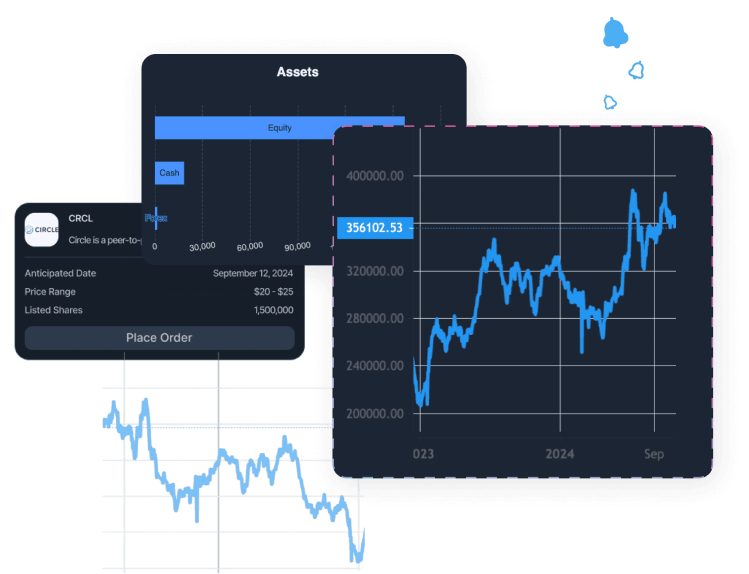
Demo Financial Advisor Software
Manage portfolios with advanced rebalancing and real-time insights.
Access customizable client reports and streamlined compliance tools.
Designed for advisors seeking efficient client and portfolio management.

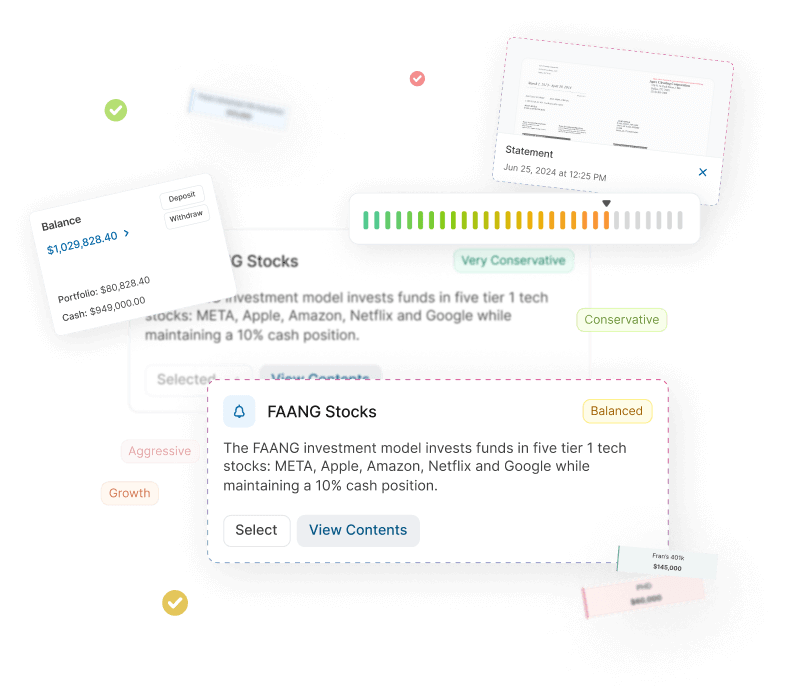
Demo Advanced Trading Platform
Test multi-asset strategies with real-time and historical data.
Analyze market depth, execute complex options, and algorithmic orders.
Ideal for refining strategies and risk management before live trading.

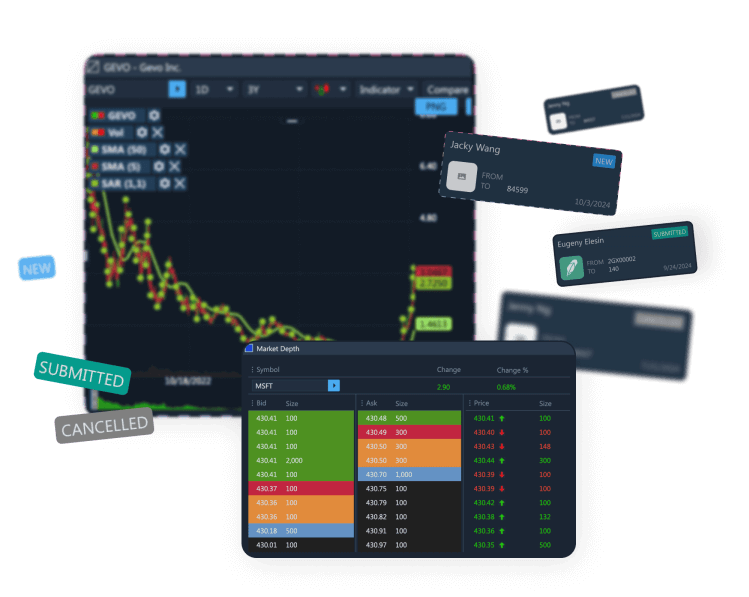
Demo Paper Trading Platform
Practice trading with virtual funds in real market conditions.
Simulate cash, margin, and day-trader accounts to gain experience.
Perfect for honing skills in a risk-free, customizable environment.