03.02.2026

The stock analysis software market is expanding from $145.6 million in 2024 to a projected $450.68 million by 2032 a 15.17% compound annual growth rate. This growth reflects fundamental shifts in how investors and advisors approach portfolio management, driven by AI integration, mobile platforms, and democratized institutional analytics.
For financial advisors managing client portfolios and sophisticated investors, selecting the right stock watchlist and comparison tools has become a strategic imperative. Retail trading activity has reached 5 times the 2010-2015 average, while 75% of global retail trades execute via smartphone apps. The best app to compare stocks must synthesize real-time data, social sentiment, fundamental analysis, and technical indicators into actionable intelligence.
| Platform | Primary Function | Best For | Starting Price | Key Differentiator |
| ETNA Trader | Trading/White-Label | Broker-dealers, RIAs, fintech | Custom | 48-hour deployment, paper trading, social sentiment AI |
| TradingView | Charting/Analysis | Active traders, technicians | Free–$239.95/mo | 400+ indicators, Pine Script |
| Seeking Alpha | Fundamental Research | Long-term investors | Free–$200/mo | Quant Ratings, earnings transcripts |
| Yahoo Finance | News/Basic Tracking | Beginners | Free–$39.95/mo | Unlimited watchlists, news aggregation |
| Koyfin | Institutional Data | Professional advisors | Free–$349/mo | 9/10 satisfaction (Kitces Study), macro analysis |
| Stock Rover | Fundamental Screening | Value investors | $7.99–$47.99/mo | 10+ years of data, research reports |
| Empower | Net Worth Aggregation | Holistic wealth tracking | Free | Real estate integration, retirement planning |
Research analysts’ data spending grew at the second-highest 15-year rate among all segments trailing only risk management. Institutional-grade platforms require:
Technical analysis software commands 35%+ market share, driven by rising adoption of charting tools and predictive analytics. Essential features:
Essential features for advisors managing $2.4+ trillion in assets:
Core Capabilities:
Paper Trading Platform:
Social Sentiment AI Index:
Traditional advisor workflows consumed 8-15 hours per prospect for data entry, risk assessment, analysis, and compliance documentation. AI-powered automation compresses this to under 10 minutes:
Impact: 41% of advisors now using generative AI tools; 45% deploying AI for research/analysis
Leading Solutions: Orion, Morningstar Total Rebalance Expert, Tamarac, iRebal, UREBAL
| Experience Level | Primary Platform | Budget | Rationale |
| Beginners | Yahoo Finance | Free | Learn fundamentals without cost |
| Intermediate (1-3yr, technical) | TradingView Pro+ | $25/mo | Sufficient charting for retail analysis |
| Advanced (3+yr, fundamental) | Stock Rover OR Seeking Alpha | $25-30/mo | Deep screening/research justify cost |
| Multi-Strategy Sophisticated | Koyfin Pro + TradingView Pro+ | $75-100/mo | Institutional data + charting coverage |
| Practice Size | Core Stack | Budget | Rationale |
| Solo (<$50M AUM) | eMoney, Orion, Koyfin | $500-1,500/mo | All-in-one solutions minimize integration |
| Small-Mid ($50M-$500M) | Best-of-breed with strong APIs | $2,000-5,000/mo | Superior individual tools + integration |
| Large ($500M+ AUM) | Enterprise platforms + white-label trading | $10,000-50,000+/mo | Scalability, branding, compliance automation |
ETNA Trader Evaluation Criteria:
The 2026 stock analysis landscape offers unprecedented capability at nearly every price point. Retail investors had access to institutional data that cost tens of thousands a decade ago. Advisors automate workflows that previously consumed entire teams. AI platforms surface insights from billions of data points instantly.
Success requires selecting platforms aligned with specific strategies, integrating tools into structured research processes, continuously leveraging underutilized capabilities, and combining technology with judgment algorithms inform rather than replace decisions.
For broker-dealers and fintech firms, white-label platforms like ETNA Trader enable rapid deployment of institutional-grade infrastructure, including paper trading for onboarding, social sentiment AI for intelligence, comprehensive compliance automation, and flexible APIs that support continuous innovation.
The 15.17% market growth through 2032 suggests continued innovation: sophisticated AI integration, alternative data sources, natural language interfaces, and deeper blockchain integration.
Begin by assessing your actual analytical needs, trading frequency, and current pain points not aspirational scenarios. Match capabilities to workflows, then strategically add complementary tools as gaps emerge. The best app to compare stocks is ultimately the one you'll use consistently, integrating insights into disciplined decision-making. Technology provides the edge; discipline captures the returns.
No. Analysis platforms help you decide what to buy, but rarely execute transactions. You need a brokerage account (Schwab, Fidelity, or Interactive Brokers) to make purchases. White-label platforms like ETNA Trader are the exception broker-dealers license them for both analysis and execution.
Essential. 75% of retail trades execute via mobile apps, but a comprehensive analysis requires desktop screen real estate. Optimal approach: desktop-based deep research + mobile monitoring/alert management. Prioritize platforms with synchronized experiences.
Free platforms impose limitations: delayed quotes, restricted watchlists, basic indicators, limited screening, and a 1-3-year history. Paid platforms offer: real-time data, unlimited watchlists, 400+ indicators, 10+ years of history, and export functionality. If superior screening generates one extra 2-3% annual return on a $100K portfolio ($2-3K benefit), subscriptions costing $300-500 justify themselves many times over.
Practices view technology as a scalability infrastructure. A $50M AUM practice generating 1% fees earns $500K annually; investing $12-18K (2.4-3.6% of revenue) in multiple specialized tools enables managing 20%+ more clients or better investment outcomes.
Yes, for testing new strategies in real market conditions before committing capital, validating backtested systems, practicing unfamiliar asset classes, and mastering platform mechanics. While emotional pressure cannot be simulated, experienced investors understand that paper trading validates strategy logic, not psychology.
Effective sentiment analysis tools stand out by combining data from a wide range of sources such as social platforms and financial communities, while applying expert curation to separate meaningful signals from noise. They allow users to analyze historical data and see how sentiment has correlated with price movements over time, and they can be tailored to specific portfolio holdings. Strong tools are also transparent about their methodology and integrate smoothly with other analytics. Importantly, they do not claim that sentiment alone can predict returns, but position it as one valuable input within a broader investment framework.

Demo Financial Advisor Software
Manage portfolios with advanced rebalancing and real-time insights.
Access customizable client reports and streamlined compliance tools.
Designed for advisors seeking efficient client and portfolio management.

Demo Advanced Trading Platform
Test multi-asset strategies with real-time and historical data.
Analyze market depth, execute complex options, and algorithmic orders.
Ideal for refining strategies and risk management before live trading.

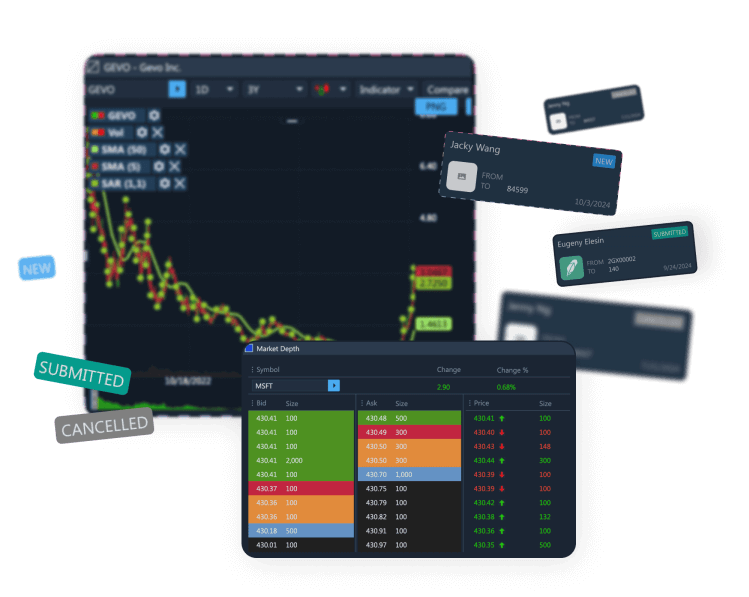
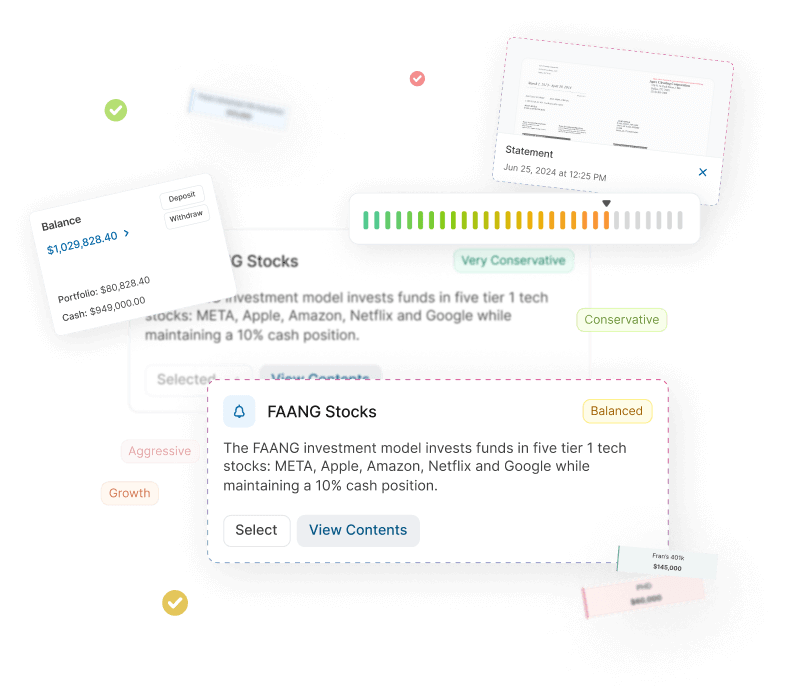
Demo Paper Trading Platform
Practice trading with virtual funds in real market conditions.
Simulate cash, margin, and day-trader accounts to gain experience.
Perfect for honing skills in a risk-free, customizable environment.