09.07.2025

Trading platform development is already a deciding factor in whether a broker-dealer or RIA grows – or gets left behind. Clients now expect instant access, mobile-first UX, and reliable execution, and the industry is responding.
According to Grand View Research, the global online trading platform market was valued at $9.57 billion in 2023 and is projected to reach $15.62 billion by 2030, growing at a CAGR of 7.3%. North America remains the largest regional market, accounting for 36.6% of global revenue in 2023. IMARC Group estimates that the market reached $10.86 billion in 2024, and will grow to $17.46 billion by 2033 at a CAGR of approximately 5.4%.
Meanwhile, Business of Apps shows that 117 million Americans used stock-trading apps in 2023, approaching the 137 million peak seen in 2021
Firms that invest in trading platform development today are securing a competitive edge, building client loyalty, and reinforcing their long-term digital infrastructure.
In 2025, the development of trading platforms is shaped not only by innovation but also by investor expectations and regulatory evolution. Broker-dealers and RIAs must account for mobile preferences, real-time data needs, compliance automation, and partner integrations. The following forces are driving the next generation of trading platforms.

Before beginning any trading platform development, firms should define a clear value proposition:
Target audience: active traders, long-term investors, or advisor-led portfolios?
Feature differentiation: fractional trading, AI analytics, tax-loss harvesting, or integrated clearing?
Integration scope: custodians, execution venues, KYC providers, or internal CRMs?
Compliance coverage: How will you handle best execution, AML, and audit trails?
These answers shape whether a firm needs a white-label trading platform or full-scale custom trading platform development.
Modern trading platforms aren’t one-size-fits-all. Broker-dealers and RIAs must choose the right platform type based on their client base, trading behavior, and operational goals. Whether you’re serving casual investors or professional traders, your choice will directly impact UX, scalability, and regulatory complexity.
| Platform Type | Use Case | Example Features |
| Web-based | Desktop and tablet users | Responsive UI, dashboard customization, notifications |
| Mobile app | On-the-go trading | Biometric login, push alerts, simplified UI, social media sentiment trading advice |
| Desktop platform | Power traders | L2 order book, multi-monitor views, customizable widgets, community communication chat toolset |
| Custom/White-label | Brand-differentiated offering | Bespoke onboarding, custom analytics, modular APIs |
Each of these requires a different trading platform development approach, tech stack, and regulatory review cycle.
a. Discovery & Requirements
Interview compliance, operations, and clients. Map out rules like Reg SCI, SEC 15c3-5, and margin control thresholds.
b. Technology Stack
Front end: React, Vue.js (web); React Native or Flutter (mobile)
Back end: Python, Go, Java + PostgreSQL or MongoDB
Real-time: WebSocket channels for quotes, order flow
Cloud/DevOps: AWS/GCP, Docker, Kubernetes, CI/CD pipelines
This architecture supports scalable, compliant, and responsive trading platform development.
c. UX & Design
WCAG accessibility
Dark/light mode toggles
Widget-based dashboards
Adaptive layouts for phones and tablets
Modern trading platforms must go beyond basic order placement. Today’s broker-dealers and RIAs need a robust feature set that supports compliance, multi-asset access, risk control, and real-time execution. Below are the core capabilities expected by both clients and regulators.
| Feature | Role |
| Multi-asset support | Trade stocks, options, ETFs, and crypto from one interface |
| Live market data | Integrated L1/L2 data feeds for real-time execution |
| OMS/EMS | Intelligent order routing, risk checks, and audit trails |
| KYC/AML modules | Automated onboarding and regulatory workflows |
| Security | Two-factor auth, encryption, SOC 2 readiness |
Advanced trading platform development services often include features like algorithmic trading SDKs or custom alerts.
AI-powered analytics: detect sentiment shifts, trending symbols
Portfolio automation: model-based rebalancing, auto-tax harvesting
Trading algorithm deployment: backtest strategies and execute in real time
White-label configurability: allow RIAs or IBs to brand their app
These are what turn a generic system into a fully customized trading platform software development success.
Trading platform development costs can vary dramatically depending on business goals, regulatory requirements, and technical complexity. Whether you’re launching a lightweight MVP or a fully modular enterprise system, it’s important to understand how pricing aligns with feature sets and compliance needs.
| Build Type | Estimated Cost |
| MVP (web or mobile only) | $80,000–$150,000 |
| Mid-tier (multi-asset, regtech-ready) | $200,000–$600,000 |
| Enterprise (multi-clearing, global, modular) | $1M+ |
Cost depends on scope, integrations, compliance depth, and ongoing support needs. A quality trading platform development company will provide phased budgeting with detailed line items.
Security and compliance are non-negotiable in trading platform development. FINRA and SEC regulations, data privacy laws, and investor protection rules require platforms to be built with enforcement and monitoring baked in from the start.
No modern trading platform development effort is complete without fully embedded compliance infrastructure.
Successful trading platforms are built in the field, not just in concept. ETNA has helped both broker-dealers and RIAs accelerate time to market and improve operational control:

ETNA offers both white-label platforms and custom trading platform development services – all tailored to U.S. compliance standards and growth-focused firms.
What is trading platform development?
The process of designing, building, and maintaining software that enables users to buy, sell, and manage financial assets online.
How much does it cost?
Anywhere from $80,000 for a simple MVP to $1 million+ for a multi-venue, multi-custodian platform.
Do I need a custom platform or white-label?
Depends on how much control you want over branding, workflows, and integrations.
What makes a platform FINRA/SEC compliant?
Best execution reporting, Reg SCI uptime metrics, audit trails, and automated KYC/AML are all core.
Whether you’re scaling as a broker-dealer, launching a new RIA product, or modernizing legacy systems, trading platform development is now central to your firm’s ability to compete.
By investing in the right technology partner – one with experience in both product engineering and regulatory landscapes – you’ll set your business up for growth, compliance, and client retention.
Ready to take the next step? Talk to the ETNA team about your trading platform roadmap.

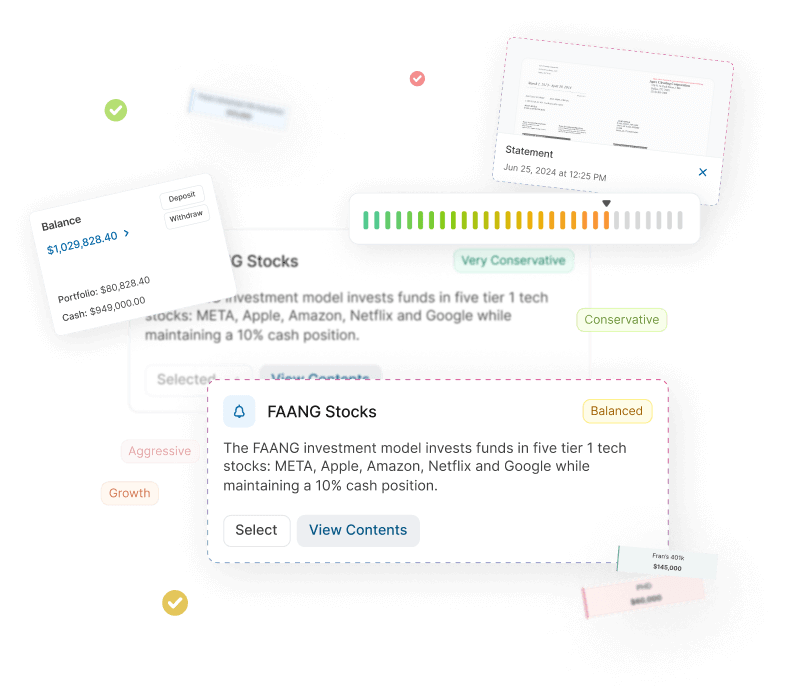
Demo Financial Advisor Software
Manage portfolios with advanced rebalancing and real-time insights.
Access customizable client reports and streamlined compliance tools.
Designed for advisors seeking efficient client and portfolio management.

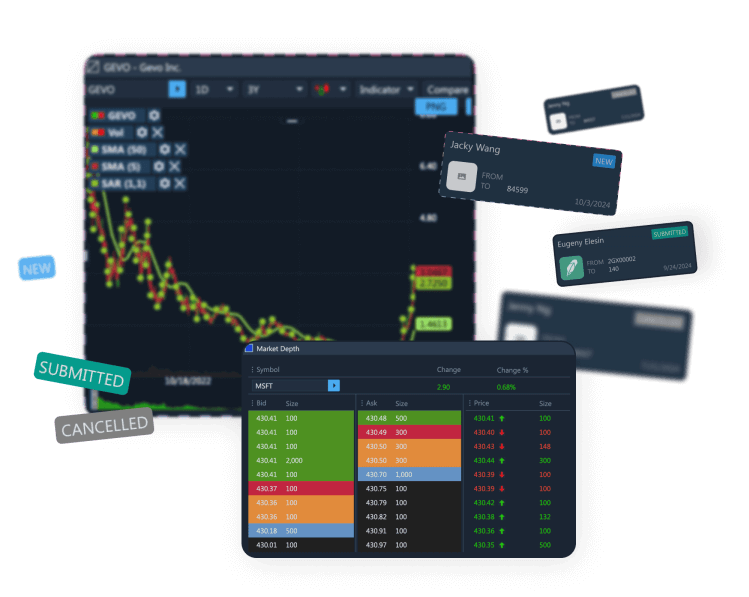
Demo Advanced Trading Platform
Test multi-asset strategies with real-time and historical data.
Analyze market depth, execute complex options, and algorithmic orders.
Ideal for refining strategies and risk management before live trading.

Demo Paper Trading Platform
Practice trading with virtual funds in real market conditions.
Simulate cash, margin, and day-trader accounts to gain experience.
Perfect for honing skills in a risk-free, customizable environment.