29.10.2026

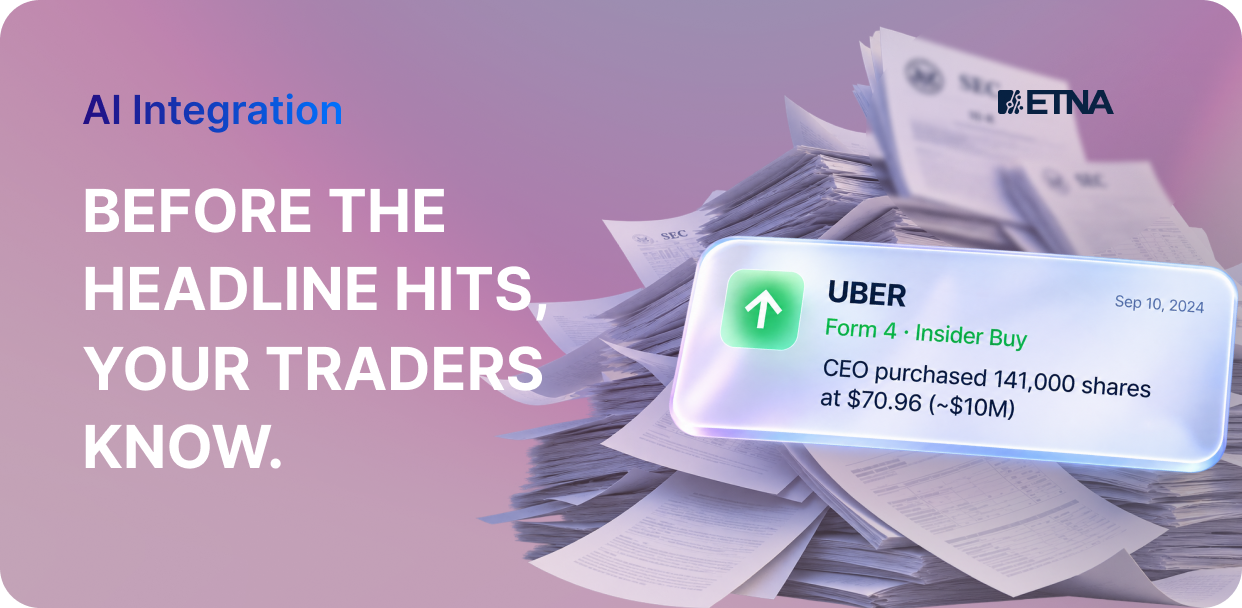
ETNA adds SEC Signals: the actual SEC document, summarized and inside the trading platform, so traders stop depending on someone else’s rewrite.
On a normal trading day the SEC accepts thousands of filings. Insider buys and sells, quarterly results, merger agreements, big shareholders crossing the 5% line, executives leaving. All of it is public the moment EDGAR accepts it.
Almost nobody reads it. A Form 4 looks like a tax return, an earnings 8-K runs to forty pages, and a merger agreement is written by lawyers for lawyers. So traders rely on a rewrite: a press release, a wire headline, a note from a broker. Sometimes that rewrite arrives at the same moment as the filing. Sometimes it arrives an hour later. And sometimes, for the quieter filings, it never arrives at all, because nobody wrote a story about a director quietly buying stock in a mid-cap on a Wednesday afternoon.
Either way the trader is one step removed from the source, reading what someone chose to tell them, in the order and at the speed that someone chose.
SEC Signals is a widget for the ETNA platform that watches EDGAR all day, reads every filing that could plausibly move a price, and turns it into a short card inside the app your clients already trade in.
A card is deliberately plain. Ticker, type of event, date, an impact score, a few sentences in plain English, and a link to the actual document on EDGAR. Insider trades are colored red for a sale and green for a purchase, because that is the first thing a trader wants to know and nobody should have to read a sentence to find it out.
Earnings go a step further. A results filing has too much in it for a paragraph, so the card shows a scorecard: revenue, EPS, margin, the segments that matter, and a few lines on what drove the quarter. You get the quarter in the time it takes to read a tweet, and the forty pages are one click away if you want them.
The summaries are generated by AI. Every card says so, and every card links to the filing it came from. If a number matters to your trade, check it against the source; the widget is built so that checking takes one click.
Here is what the feed showed last month.
On September 10 Oracle reported its first quarter after the close. Revenue $19.3 billion, up 30% on the year. GAAP net income up 60%. Cloud infrastructure revenue up 121%. Oracle issued a press release at the same time, as large companies do, and the stock moved sharply after hours. What the card added was not speed over the press release. It was the full set of numbers, including the ones the headline left out, with the 8-K itself one click away.
The same day a Form 4 landed from Uber: the CEO had bought 141,000 shares at an average of $70.96, a little over $10 million of his own money. There was no press release for that. Most traders only learn about insider purchases when a data vendor or a columnist gets around to them, often the next day. The card showed it the day it was filed, and the stock rose about 3% on noticeably heavier volume.
That evening ACV Auctions filed a definitive agreement to be acquired by Copart at $10.50 a share in cash, a premium of around 44% to the previous close. The deal had been rumored since August, so this was not a surprise to everyone. But rumors and a filed agreement are different things. The card gave the terms, the timeline, and the termination fees from the document itself, not a summary of a summary.
The pattern across all three is the same. The value is not that SEC Signals beats the news. It is that the trader reads the filing rather than a rewrite of it, with nothing lost in between.
A lot of the design work went into what the widget should not do. It should not be another firehose. So it filters by instrument, by type of event and by date, and it can group everything by stock so you see all the signals for a position together. New items since your last visit are marked. That is roughly it.
The workflow it is built around is a trader’s first ten minutes. Open the platform. See what was filed overnight on the names you care about, ranked by how much it matters. Read the two or three that look interesting. Open the chart. Trade. All without leaving the screen.
If you run on ETNA, SEC Signals is an add-on you can switch on for your platform. It takes your theme on web and mobile, it works on whichever instruments you point it at, up to the whole US-listed universe, and it does not need a research desk behind it. The EDGAR monitoring and the AI summaries come from our data partner; ETNA builds the widget and the integration.
Every summary links to the primary document, which tends to be the first thing a compliance team asks about.
The second question is usually whether this data may be used in a commercial product at all. It may. SEC filings are public records, and the SEC states that information on sec.gov can be copied and redistributed without its permission. No license or data agreement is required.
Send us a list of instruments and a contact for your demo environment, and we will stand the widget up there in your theme. Run it for two weeks, then we will send you a readout of what your traders read, searched for, and asked for more of. Decide after that.
Talk to your ETNA account manager, or write to us at [email protected].
Summaries in SEC Signals are generated by AI and may contain errors. Every signal links to the original SEC filing, which is the authoritative source. SEC Signals is not affiliated with or approved by the U.S. Securities and Exchange Commission. This article is not investment advice.

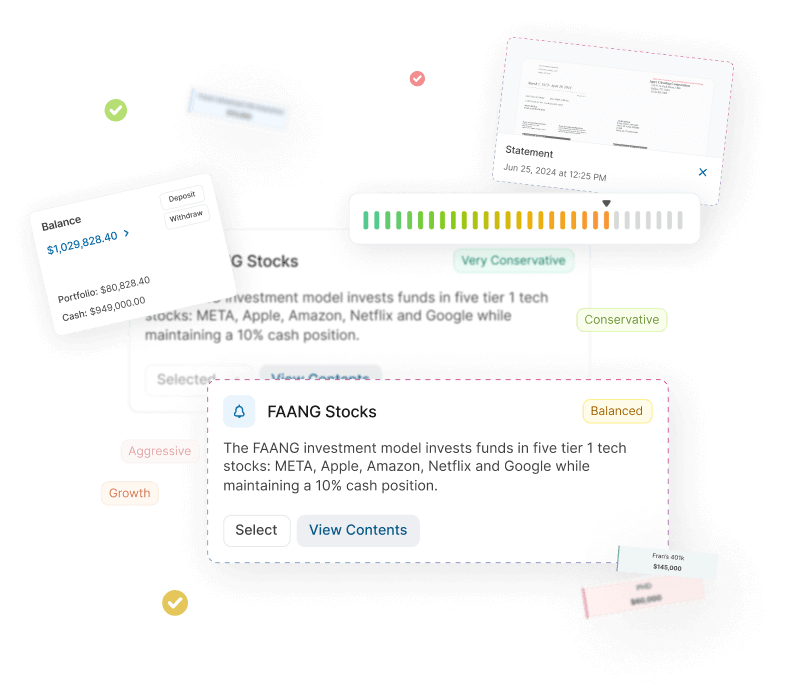
Demo Financial Advisor Software
Manage portfolios with advanced rebalancing and real-time insights.
Access customizable client reports and streamlined compliance tools.
Designed for advisors seeking efficient client and portfolio management.

Demo Advanced Trading Platform
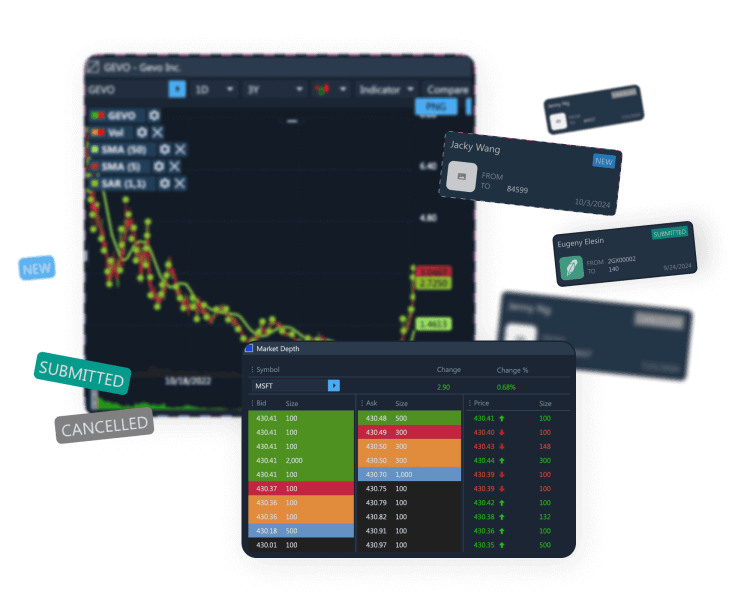
Test multi-asset strategies with real-time and historical data.
Analyze market depth, execute complex options, and algorithmic orders.
Ideal for refining strategies and risk management before live trading.

Demo Paper Trading Platform
Practice trading with virtual funds in real market conditions.
Simulate cash, margin, and day-trader accounts to gain experience.
Perfect for honing skills in a risk-free, customizable environment.