10.02.2026

The automated investment landscape has transformed dramatically, with robo-advisor assets projected to reach $3.2 trillion by 2033. For RIAs seeking to scale their practice and serve more clients efficiently, understanding this technology is no longer optional it’s essential for competitive survival.
A robo-advisor is an automated investment platform that uses algorithms to build, manage, and rebalance investment portfolios based on your financial goals and risk tolerance. The process follows a straightforward sequence: investors complete a questionnaire about their goals and risk appetite, algorithms analyze responses to recommend an optimal asset allocation, the platform automatically invests in a diversified portfolio of low-cost ETFs, and ongoing rebalancing maintains target allocations as markets fluctuate.
When selecting an automated investment platform, evaluate these criteria:
| Service Tier | Typical Fee | Minimum | CFP Access |
| Digital-Only | 0%-0.25% | $0-$500 | None |
| Hybrid (Digital + Human) | 0.35%-0.65% | $10,000-$25,000 | Yes, unlimited |
Best For: Low-cost, long-term index investing
Management Fee: Approximately 0.15% (net advisory fee after fund credits)
Account Minimum: $100
Key Feature: Access to Vanguard’s industry-leading low-cost index funds with automatic rebalancing and tax-loss harvesting for taxable accounts
Best For: Fee-conscious investors with $5,000+ to invest
Management Fee: $0 advisory fee
Account Minimum: $5,000
Key Feature: Zero management fees with tax-loss harvesting available for accounts over $50,000; premium tier adds unlimited CFP access for $30/month after initial $300 planning fee
Best For: Beginners and small account balances
Management Fee: $0 for accounts under $25,000; 0.35% above that threshold
Account Minimum: $10
Key Feature: No fees on balances under $25,000 makes this ideal for young investors starting their journey; uses proprietary Fidelity Flex funds with zero expense ratios
Best For: Goal-based investing with tax optimization
Management Fee: 0.25% (Digital); 0.65% (Premium with CFP access)
Account Minimum: $0
Key Feature: Sophisticated tax-coordinated portfolio across multiple accounts, charitable giving features, and socially responsible investment options
Best For: Tax-efficient investing and financial planning
Management Fee: 0.25%
Account Minimum: $500
Key Feature: Direct indexing for accounts over $100,000, which can harvest losses at the individual stock level for enhanced tax efficiency
For RIAs looking to launch their own branded automated investment platform, white-label solutions offer a faster path to market than building from scratch. Platforms like ETNA Financial Advisor Software provide the complete technology infrastructure (including automated portfolio rebalancing), trade execution, client portals, compliance automation, and payments/funding schedules enabling advisory firms to offer sophisticated robo-advisory services under their own brand. This approach lets RIAs compete with industry giants while maintaining client relationships and customizing the investment experience.
| Robo-Advisor | Management Fee | Account Minimum | Tax-Loss Harvesting | Hybrid Access | Best For |
| Vanguard Digital Advisor | ~0.15% | $100 | Yes | Yes ($50K+) | Low-cost indexing |
| Schwab Intelligent Portfolios | $0 | $5,000 | Yes ($50K+) | Yes (Premium) | Zero-fee investing |
| Fidelity Go | $0 (<$25K) / 0.35% | $10 | No | Yes ($25K+) | Beginners |
| Betterment | 0.25% / 0.65% | $0 | Yes | Yes (Premium) | Goal-based planning |
| Wealthfront | 0.25% | $500 | Yes | No | Tax optimization |
| SoFi Automated Investing | $0 | $1 | No | Yes (free) | New investors |
Rankings evaluate robo advisors across six weighted criteria: management fees and total cost structure (25%), minimum investment requirements and accessibility (15%), portfolio construction quality and diversification (20%), tax optimization features including tax-loss harvesting (15%), availability of human advisor access (15%), and account types supported including taxable, IRA, and 401(k) rollovers (10%). Performance data comes from actual client account returns where available, supplemented by backtested model portfolios.
Yes, robo-advisors are regulated by the SEC and FINRA, just like traditional brokerage firms. Client assets are held at established custodians and protected by SIPC insurance up to $500,000 per account. The underlying investments are standard securities like ETFs and mutual funds, not exotic instruments.
Robo-advisors excel at retirement planning through automatic contributions, tax-advantaged account management (Traditional IRA, Roth IRA, SEP IRA), and glide-path adjustments that become more conservative as you approach retirement. Most platforms offer retirement-specific calculators and goal-tracking features.
Robo-advisors primarily earn revenue through management fees charged as a percentage of assets under management, typically 0%-0.35% annually. Some platforms generate additional revenue from cash sweep programs, payment for order flow, or securities lending.
Direct advisory fees range from $0 (Schwab, Fidelity under $25K) to 0.35% for digital-only services and 0.40%-0.65% for hybrid services with human advisor access. Investors also pay underlying fund expense ratios, typically 0.03%-0.15% for index ETFs, bringing total costs to 0.10%-0.50% annually for most portfolios.
Opening an account typically takes 10-15 minutes online: complete a risk tolerance questionnaire, provide personal information for identity verification, link a bank account for funding, and select your investment goals. Most platforms allow initial investments via ACH transfer, wire, or rollover from existing retirement accounts.

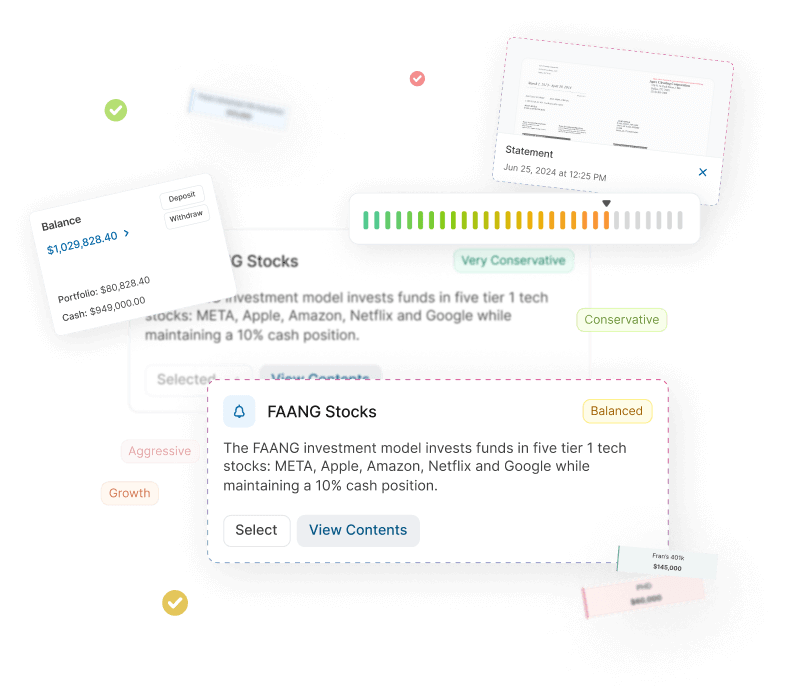
Demo Financial Advisor Software
Manage portfolios with advanced rebalancing and real-time insights.
Access customizable client reports and streamlined compliance tools.
Designed for advisors seeking efficient client and portfolio management.

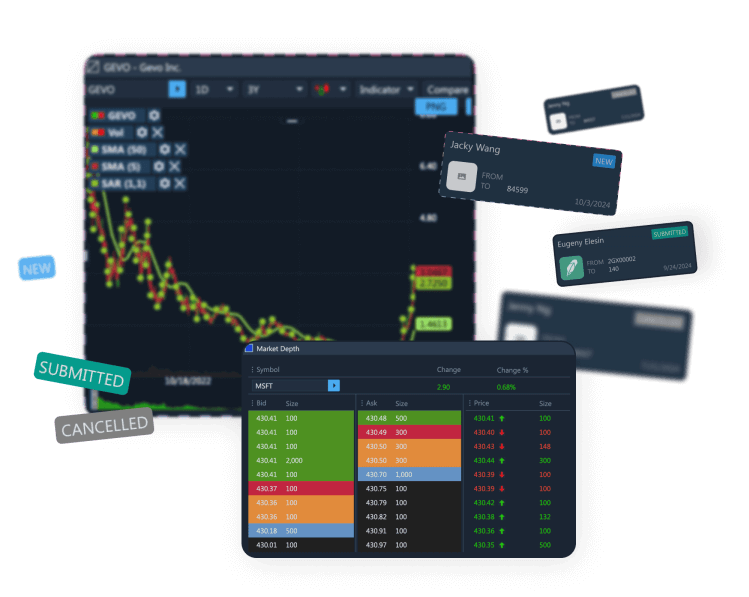
Demo Advanced Trading Platform
Test multi-asset strategies with real-time and historical data.
Analyze market depth, execute complex options, and algorithmic orders.
Ideal for refining strategies and risk management before live trading.

Demo Paper Trading Platform
Practice trading with virtual funds in real market conditions.
Simulate cash, margin, and day-trader accounts to gain experience.
Perfect for honing skills in a risk-free, customizable environment.