12.01.2026


The wealth management industry is experiencing a fundamental transformation in how investment advisors construct and manage client portfolios. Model investment portfolios have emerged as the dominant solution, with assets reaching $7.7 trillion in Q1 2025, representing 34.2% of all retail intermediary-managed assets. For RIA executives and managers, understanding how to build, manage, and automate model stock portfolios using advanced advisor tools is no longer optional it’s essential for competitive survival and scalable growth. This comprehensive guide explores industry best practices, cutting-edge AI automation trends, and practical implementation strategies that empower wealth management firms to deliver institutional-grade portfolio management at scale.
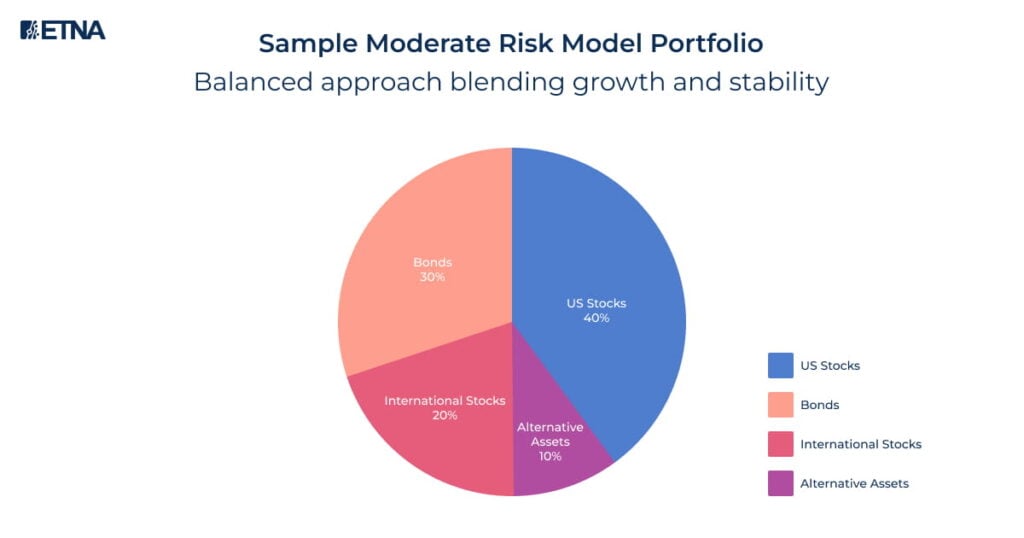
Sample moderate risk model portfolio showing asset allocation across four key categories
A model investment portfolio is a predefined, strategically allocated mix of assets that is professionally managed and continuously rebalanced to maintain target allocations. Unlike traditional custom portfolio construction where each client receives individualized security selection, a portfolio model serves as a template that can be efficiently deployed across multiple client accounts while still allowing for personalization based on individual circumstances.
The core characteristics of model portfolios include:
The significance of model portfolios extends beyond operational efficiency. According to Broadridge research, model portfolios are projected to grow at 15% annually, reaching $13.2 trillion by 2029. This explosive growth reflects a structural shift in how wealth is managed, driven by advisor demand for scalability, client expectations for institutional-quality management, and regulatory pressures for consistent fiduciary processes. For RIA managers, model portfolios represent the foundation for building a sustainable, profitable practice that can compete with wirehouses and larger platforms while maintaining the personalized service that defines the independent advisory channel.
The adoption of model portfolios delivers transformative advantages for both advisory firms and their clients, fundamentally reshaping the economics and service delivery of wealth management practices.
Model portfolios liberate advisors from the time-consuming mechanics of individual portfolio construction, enabling them to redirect their expertise toward high-value client relationship activities. The operational benefits are substantial and measurable:
The efficiency gains translate directly to profitability. By automating repetitive portfolio management tasks, RIA firms can increase revenue per advisor while simultaneously improving client service quality a rare combination that positions model-based practices for sustainable competitive advantage.
From the client perspective, model portfolios democratize access to institutional-quality investment management that was previously available only to ultra-high-net-worth families and endowments. The client-facing advantages include:
| Feature | Traditional Investing | Model Portfolio |
| Management Cost | Higher (1.0-2.5% annually) | Lower (0.25-1.0% annually) |
| Rebalancing Frequency | Inconsistent/Manual | Automated/Regular |
| Access to Institutional Expertise | Limited | Institutional-grade |
| Implementation Time | Weeks to months per client | Minutes to hours |
| Scalability | Difficult to scale | Highly scalable |
| Consistency Across Clients | Varies by advisor/client | Standardized yet customizable |
Cost efficiency emerges as a compelling client benefit, with model portfolios typically charging lower fees than custom management while delivering professional oversight. Research indicates that 79% of investors with assets in model portfolios are satisfied with their fees compared to 56% of investors without models, suggesting that clients perceive strong value in the model approach. The diversification, risk management, and long-term focus embedded in professional models help keep clients invested during volatile periods, reducing the behavioral mistakes that undermine long-term wealth accumulation. Additionally, 45% of advisors find that models allow them to offer clients access to more asset classes and investment strategies than they could provide independently, expanding opportunity sets for middle-market investors.
Model portfolios are not one-size-fits-all solutions but rather a spectrum of strategies designed to address varying client needs, risk tolerances, and investment objectives. Understanding the taxonomy of model types enables RIA managers to construct comprehensive offering platforms.
The most common approach to model portfolio construction organizes strategies along a risk spectrum, typically defined by equity-to-fixed-income ratios:
According to Broadridge data, equity funds account for 65% of total model assets ($1.96 trillion) as of Q2 2024, reflecting the industry’s tilt toward growth-oriented strategies in a prolonged bull market. This concentration underscores the importance of understanding risk-based segmentation as client demographics and market conditions evolve.
The evolution of model portfolio design has moved beyond simple risk-based categorization to encompass specific outcome objectives that align with distinct client goals:
The trend toward outcome-based models reflects increasing client sophistication and the wealth management industry’s maturation from product-centric to goals-based advisory relationships.
Model portfolios are not abstract concepts but practical investment vehicles delivered through various managed account structures. Understanding these delivery mechanisms is essential for RIA managers designing scalable service offerings.
Separately Managed Accounts represent the traditional vehicle for delivering customized portfolio management, where clients own individual securities directly rather than through pooled investment vehicles. The SMA structure offers several distinctive advantages:
SMAs have become increasingly accessible to mass-affluent clients as technology platforms reduced minimum account sizes from traditional $250,000+ thresholds to as low as $25,000-$50,000 for many programs.
Managed Discretionary Accounts provide advisors with trading authority to implement model changes across client accounts without individual approvals for each transaction. This discretionary authority streamlines operations while maintaining fiduciary oversight. Unified Managed Accounts take integration further by consolidating multiple investment strategies potentially including separate SMAs, mutual funds, and ETFs into a single account structure with unified reporting, rebalancing, and tax management.
The UMA structure addresses a critical pain point in multi-strategy portfolios: optimizing asset location and tax efficiency across disparate holdings. By viewing all investments holistically, UMAs can implement sophisticated tax-loss harvesting across strategy boundaries while maintaining target allocations to each underlying model.
Individually Managed Accounts represent the highest level of customization, where portfolios are constructed from scratch based on each client’s unique circumstances, legacy holdings, tax situations, and specific constraints. While IMAs provide maximum flexibility, they sacrifice the scalability advantages of standardized models and typically require larger account minimums and higher fees to justify the custom construction effort.
The evolution of managed account vehicles reflects a balance between personalization and efficiency, with most RIA firms offering a tiered approach that matches account structure to client complexity and asset size.
For RIA managers ready to implement or enhance their model portfolio capabilities, selecting the right technology partner is paramount to success. ETNA’s comprehensive RIA platform provides the next-generation infrastructure purpose-built for wealth management firms seeking to scale efficiently while delivering institutional-quality portfolio management.
ETNA’s automated RIA solution addresses every critical requirement for successful model portfolio implementation:
The platform’s API-driven architecture enables customization and integration with existing business applications, creating a truly personalized digital back office that adapts to unique firm workflows rather than forcing standardization around platform constraints.
As the wealth management industry continues its structural evolution toward model-based investing, RIA firms that embrace automation, leverage AI capabilities, and implement scalable technology infrastructure will capture disproportionate market share and profitability. The convergence of model portfolios, advanced rebalancing automation, and AI-powered intelligence represents the future of competitive wealth management a future that leading RIAs are building today.
Transform your RIA practice with the technology infrastructure that powers modern wealth management. Book your ETNA model portfolio management product demo session to discover how automated rebalancing, AI-enhanced analytics, and institutional-grade portfolio tools can elevate your firm’s capabilities while reducing operational complexity. Visit ETNA’s RIA platform to learn more about building model portfolios with confidence and scaling your advisory practice for sustainable growth in 2025 and beyond.

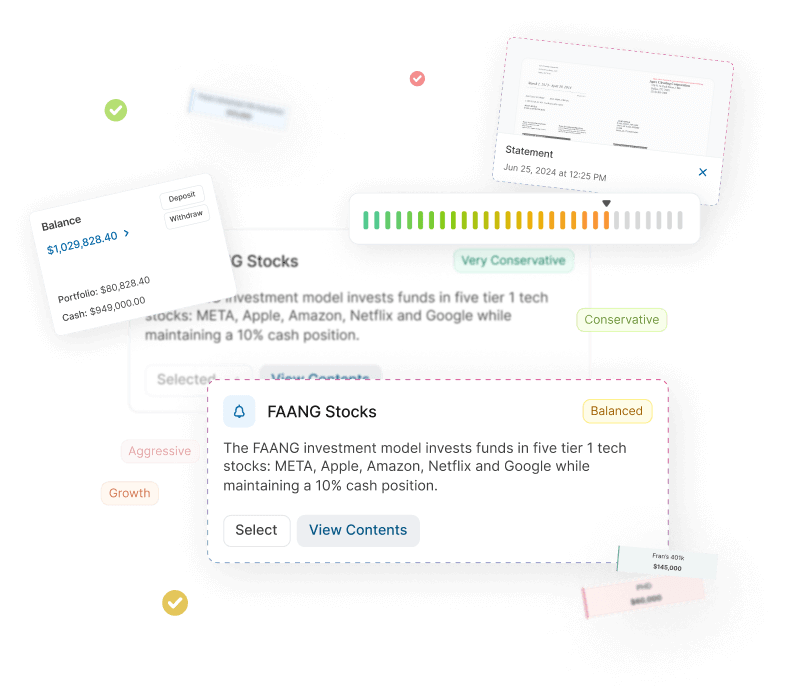
Demo Financial Advisor Software
Manage portfolios with advanced rebalancing and real-time insights.
Access customizable client reports and streamlined compliance tools.
Designed for advisors seeking efficient client and portfolio management.

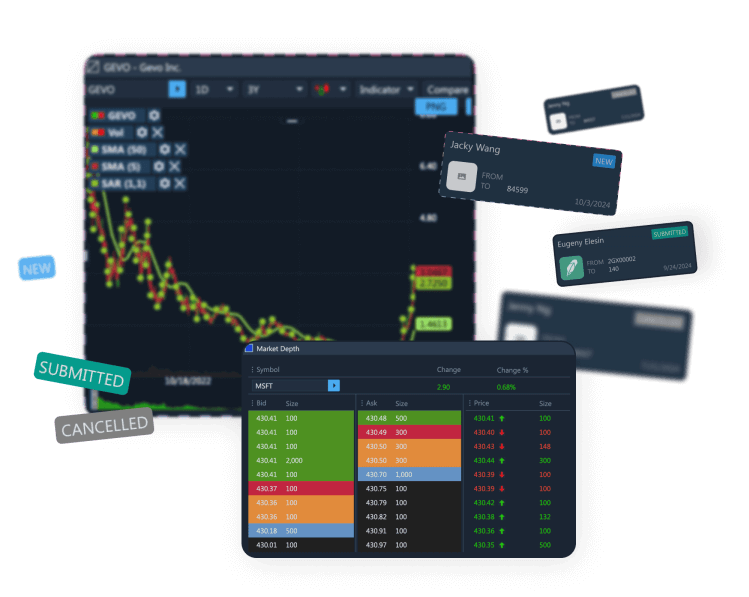
Demo Advanced Trading Platform
Test multi-asset strategies with real-time and historical data.
Analyze market depth, execute complex options, and algorithmic orders.
Ideal for refining strategies and risk management before live trading.

Demo Paper Trading Platform
Practice trading with virtual funds in real market conditions.
Simulate cash, margin, and day-trader accounts to gain experience.
Perfect for honing skills in a risk-free, customizable environment.