02.09.2025


The wealth management industry is undergoing a period of unprecedented change. The global market now represents $62 trillion in assets under management (AUM) and is expected to reach $85 trillion by 2028. Within this framework, a major transformation is taking place: the rapid adoption of multi-custodian trading models.
What’s driving this trend?
The industry’s shift is driven by both risk management and client demand. More sophisticated investors expect:

For Broker-Dealers:
For Registered Investment Advisors (RIAs):
| Pros | Cons |
| Diversified risk operational and counterparty | Greater operational complexity, especially in integration |
| Enhanced client flexibility and retention | Higher costs for technology and compliance |
| Improved negotiating power with service providers | Data consolidation and unified reporting challenges |
| Access to unique products/markets per custodian | Varying operational procedures and regulatory requirements |
Data analytics and automation tools are rapidly mitigating traditional challenges, enabling better data consolidation and real-time reporting.
Order Management Systems (OMS) tailored for multi-custodian environments include:
ETNA Software provides a purpose-built solution for broker-dealers and RIAs:
Why ETNA?
Modern firms seeking a competitive advantage require:
Successful multi-custodian implementations require robust technology infrastructure that can handle data aggregation, real-time reporting, and seamless workflow management across multiple platforms. Firms should prioritize solutions that offer:
Staff training and operational procedures must be carefully designed to support multi-custodian operations. This includes training team members on multiple custodial platforms, establishing clear operational workflows, and implementing robust quality control measures.
Client communication strategies should emphasize the benefits of multi-custodian capabilities while ensuring clients understand how their assets are managed across different platforms.
Governance frameworks must account for the increased complexity of multi-custodian operations. This includes establishing clear oversight responsibilities, implementing robust risk monitoring procedures, and maintaining appropriate contingency plans for operational disruptions.
The regulatory environment continues to evolve in ways that support multi-custodian operations. Enhanced best execution requirements and increased focus on operational resilience are driving firms toward more diversified custodial relationships.
Market consolidation among major custodians is likely to continue, making multi-custodian capabilities even more valuable as firms seek to maintain competitive options and avoid over-dependence on dominant players.
Artificial intelligence and machine learning technologies are increasingly being integrated into multi-custodian platforms, enabling more sophisticated portfolio management, risk monitoring, and client service capabilities.
Cloud-based infrastructure and API-driven integration are making multi-custodian operations more accessible to smaller firms, democratizing access to capabilities that were previously
Multi-custodian trading is no longer a niche it’s the backbone of proactive, resilient broker-dealers and RIAs. Firms that invest in robust, flexible platforms like ETNA position themselves to capture growth, satisfy evolving client expectations, and mitigate risk in a consolidating market. The future belongs to those who empower client choice, institutional reliability, and industry innovation.

Demo Financial Advisor Software
Manage portfolios with advanced rebalancing and real-time insights.
Access customizable client reports and streamlined compliance tools.
Designed for advisors seeking efficient client and portfolio management.

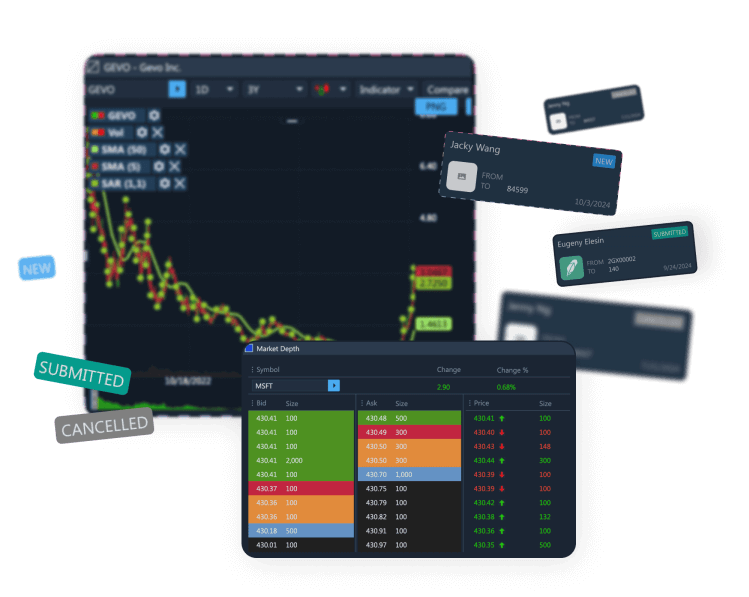
Demo Advanced Trading Platform
Test multi-asset strategies with real-time and historical data.
Analyze market depth, execute complex options, and algorithmic orders.
Ideal for refining strategies and risk management before live trading.

Demo Paper Trading Platform
Practice trading with virtual funds in real market conditions.
Simulate cash, margin, and day-trader accounts to gain experience.
Perfect for honing skills in a risk-free, customizable environment.